Buy an Apartment in São Paulo with Local Support, in English
Póvoa is a licensed boutique brokerage in São Paulo (CRECI/SP J-043301) that sells new developments in the city's south zone: Itaim Bibi, Vila Nova Conceição, Moema, Brooklin, Vila Olímpia and Campo Belo. If you live outside Brazil, we help you choose the right building, check the paperwork and complete the purchase — in person or from abroad.
CRECI/SP J-043301 · licensed brokerage
Office: Av. Berrini, 1748, Brooklin, São Paulo
Replies in English within one business day (São Paulo time, UTC−3)
Page updated 2 October 2026. Figures and rules checked monthly.
Buying property in São Paulo as a foreigner: the key facts
Eight facts that answer most first questions. Each one is explained further down the page, with its source.
Foreign citizens can own urban property in Brazil in their own name. No visa, residency permit or Brazilian company is required to own an apartment in São Paulo.
You will need a CPF, the Brazilian individual taxpayer number. You can obtain it from abroad, at a Brazilian consulate or online, before you buy.
You don't have to travel to Brazil to complete a purchase. A power of attorney, typically signed at a Brazilian consulate, lets a representative sign for you.
Ownership is transferred by registration at the Property Registry (Registro de Imóveis), not by the contract or the payment.
The city of São Paulo charges a 3% transfer tax (ITBI). Deed and registration fees follow the São Paulo state fee tables in force since 8 January 2026: about R$ 10,000 combined for a property of R$ 1,000,000.
Mortgages are rarely available to non-residents. Most international buyers pay with their own funds; off-plan purchases can be paid in installments to the developer during construction.
Brazil has a residency-by-investment route for real estate: at least R$ 1,000,000 invested in urban property in São Paulo with funds from abroad, assessed by the Ministry of Justice. Buying does not grant residency by itself.
Póvoa is paid by the developer. For the developments we represent, you pay the developer's official list price and no separate fee to us.
Last checked 2 October 2026. Sources at the end of the page.
Who is responsible for your purchase
Pedro Póvoa
Founder of Póvoa Boutique Imobiliária. Licensed real estate broker (CRECI/SP 266789-F), economist (CORECON/SP 38046) and certified property valuer (CNAI 25693), with a postgraduate degree in Real Estate Law and an MBA in Business Management. As founder, he is responsible for the service described on this page.
Our team replies in English by WhatsApp, e-mail and video call (Google Meet), within one business day, São Paulo time (UTC−3).
From the first conversation, we ask about your goal, budget and timing, and whether you plan to visit. Within a few days you get a shortlist of three to five developments that fit, with price lists, floor plans and our notes on each one. Then we go through them together on a video call. If none of them fits, we tell you: the next conversation is more useful than a forced sale.
Pedro leads a team of licensed brokers, each dedicated to one south-zone neighborhood.
How Póvoa is paid — and what you pay for
In Brazil, new developments are sold through licensed brokers and the developer pays the brokerage commission. For the developments Póvoa represents, including every one on this page, you pay the developer's official list price. The commission is not added to your price, and we charge no separate search, consulting or closing fee.
What you do pay are the costs of the purchase itself: the apartment, the municipal transfer tax, deed and registry fees, currency exchange, translations, and your own lawyer if you hire one. They are listed, with figures, in the costs section below.
Two things worth knowing up front. First, we are paid by whichever developer you end up buying from, so we have no reason to push one building over another; our job is to compare them for you. Second, our shortlist comes from the developments we work with in the south zone. If what you need isn't among them, we say so, and we tell you how we would be paid before doing anything else. Before any proposal, you receive in writing how the price and the commission are structured for that specific development.
Who this service is for
Moving to São Paulo
You want a home that's ready, or ready soon, near your office, the park or an international school. We shortlist by commute and daily life, not by brochure.
Investing for rental income
You want a unit that rents well: studios and one-bedrooms near Faria Lima, Berrini and Ibirapuera Park. We show you what's being delivered, asking rents in the area (with source and date) and the tax on rent for non-residents.
Investing with residency in mind
You're weighing Brazil's residency-by-investment route. The property must meet specific conditions. We help you choose a building that fits them; an immigration lawyer handles the application.
Brazilian living abroad? This page is written for non-Portuguese speakers; you may prefer our Portuguese site. The service is the same either way.
Apartments for sale in São Paulo: our current selection
These are developments Póvoa represents, in neighborhoods we know street by street. Prices are in Brazilian reais (BRL), taken from each developer's official price list, with the list date shown. Each card links to the full page in Portuguese (floor plans, specifications, photos); ask for the current price list in English on WhatsApp.
Pre-launch: registration of interest; delivery forecast as informed by the developer. Launch: sales open; delivery forecast as informed by the developer. Under construction: delivery forecast as informed by the developer. Ready: delivered, keys available.
Images are the developers' artist's impressions unless marked as photos.
Renato 410
Developer: Even
Neighborhood: Itaim Bibi
Status: Launch
Units: 276–549 m² · up to 5 suites
Request current pricing
Why it may fit an international buyer: Even's tower at Rua Dr. Renato Paes de Barros, 410, Itaim Bibi, about 700 m from Faria Lima: apartments from 276 m² with a private office in every unit, plus gardens, duplexes and penthouses up to 549 m² with up to 5 suites, and a covered clay tennis court.
Points to consider: Large family homes, not compact investment units: the smallest layout is about 276 m² with 3 parking spaces. Launch prices are shared on request.
Units: 283–416 m² apartments · 4 suites · duplex units
From R$ 8,808,000 (price list of September 2026)
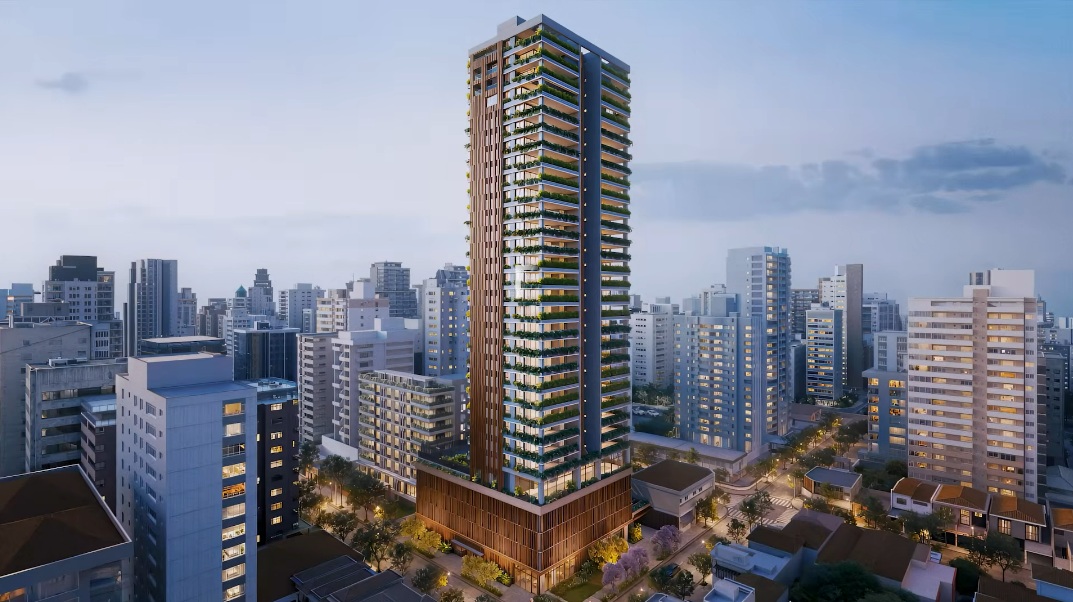
Why it may fit an international buyer: Cyrela & Nortis on Avenida Sabiá, 418, Moema, near Ibirapuera Park: two towers with 4-suite apartments of 283 to 416 m² plus duplex units, an indoor 25 m lap pool and a tennis court.
Points to consider: Each layout belongs to a specific tower and unit position, so the size you want narrows the floor and view options. Ask us which units are still available.
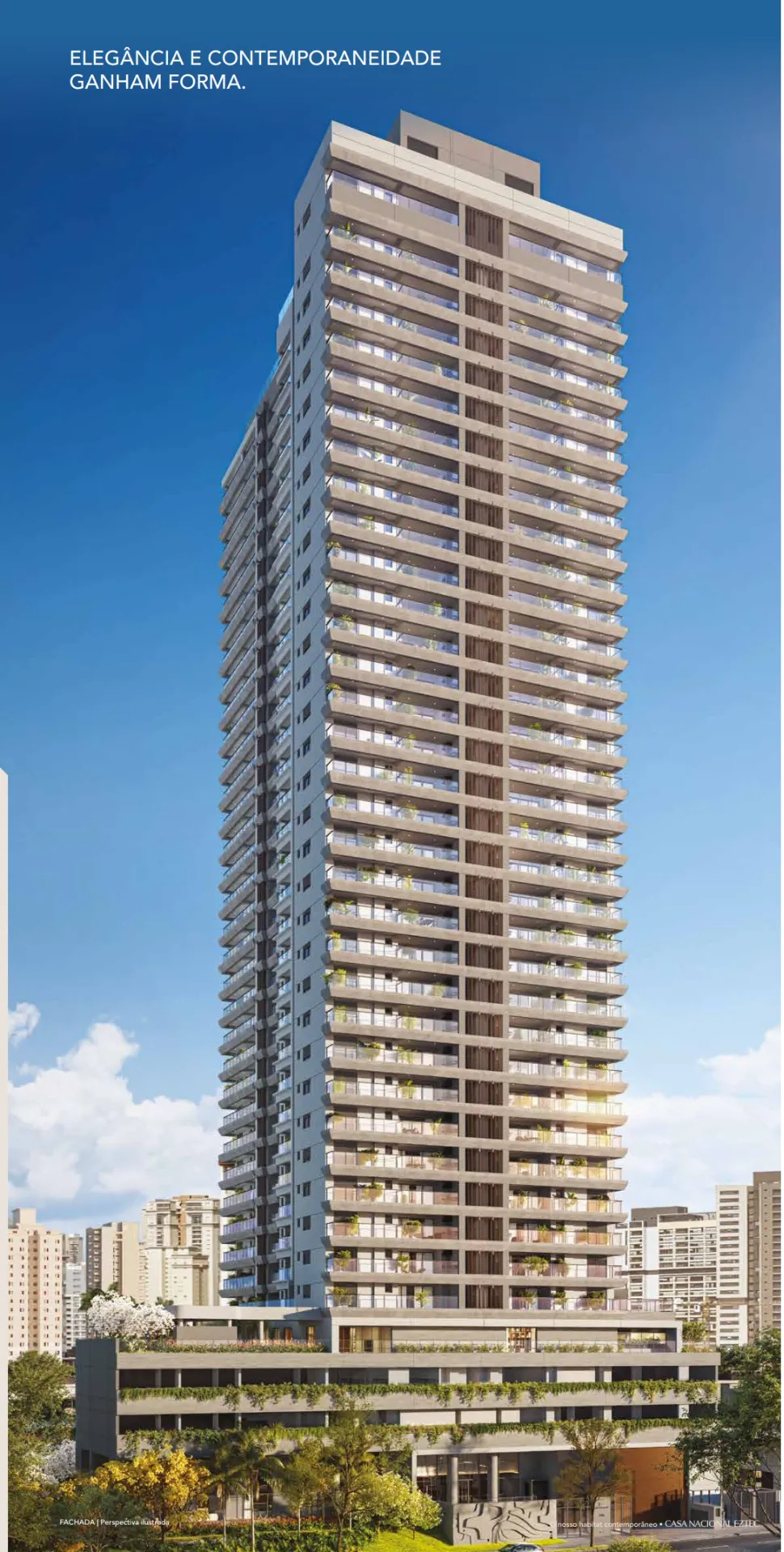
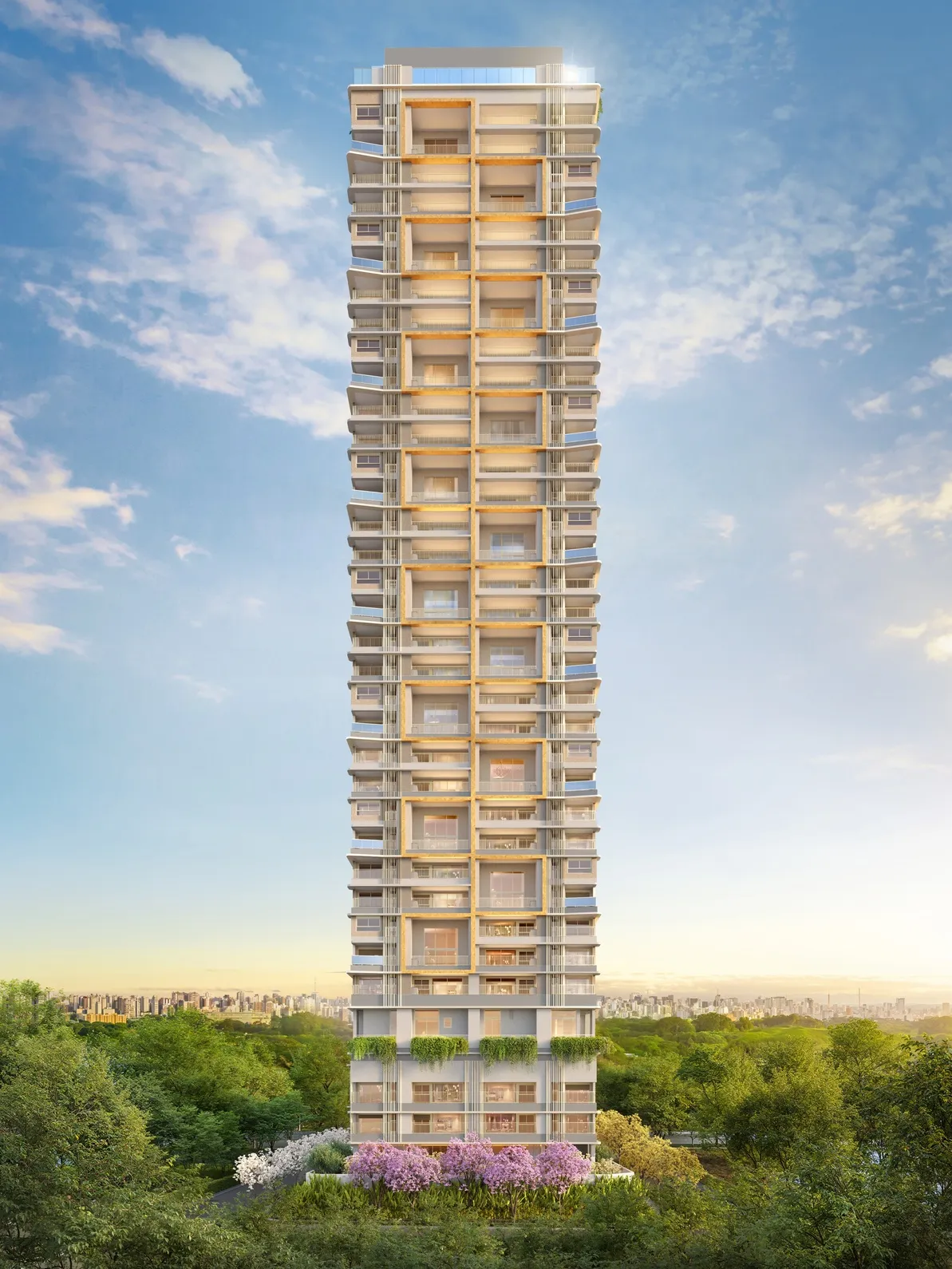
Why it may fit an international buyer: Eztec/Lindenberg on Rua Diogo de Quadros, 440, Brooklin: a 36-floor tower with 2-suite (114 m²) and 3-suite (136 m²) apartments, 2 parking spaces and a private elevator hall in every unit; landscaping by Burle Marx Escritório de Paisagismo.
Points to consider: 188 apartments, six per floor. Buyers who want fewer neighbors per floor should compare it with lower-density buildings.
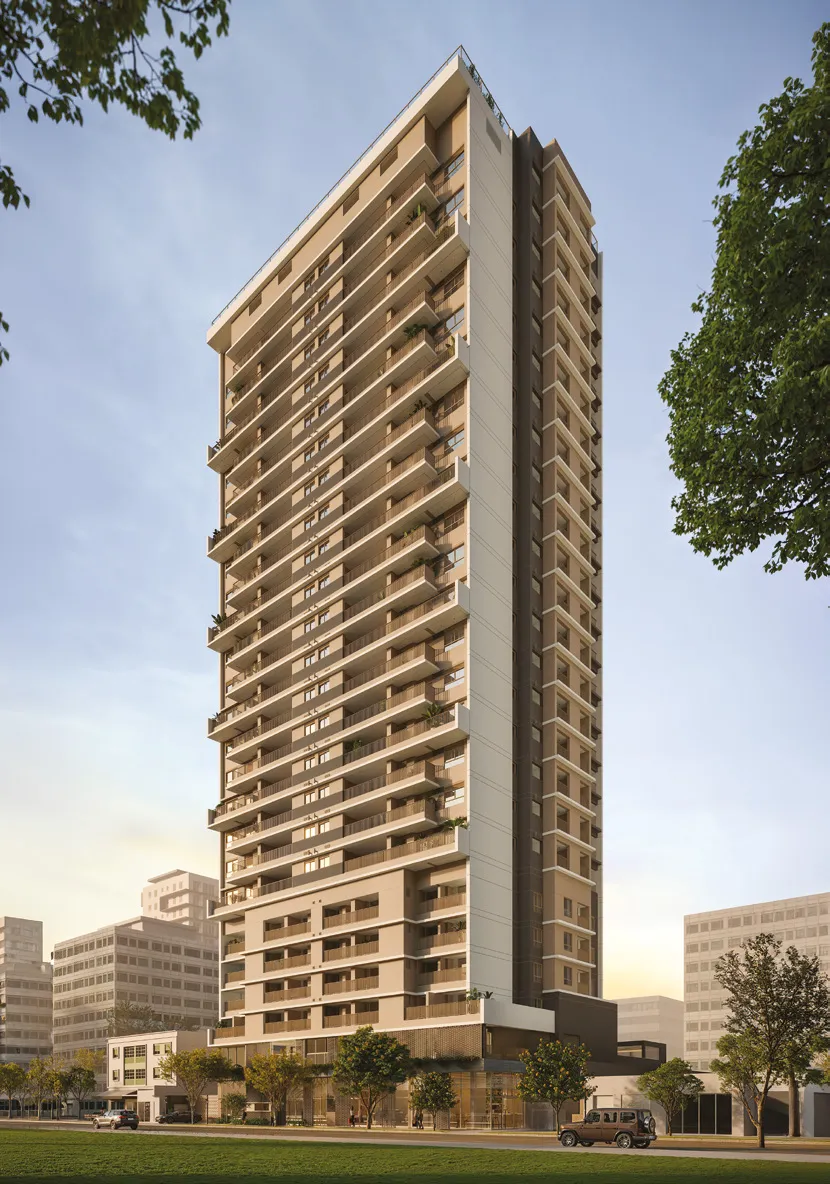
Why it may fit an international buyer: Cyrela & Magik LZ on Rua Flórida, 675, Brooklin: 1- to 3-bedroom apartments of 52 to 99 m², some with double-height living rooms, and resort-style amenities including an indoor heated pool, a tennis court and a 36th-floor rooftop.
Points to consider: Some units in this building are HMP (income-restricted housing under São Paulo rules). Those are not offered to international buyers; we confirm each unit's classification before you choose.
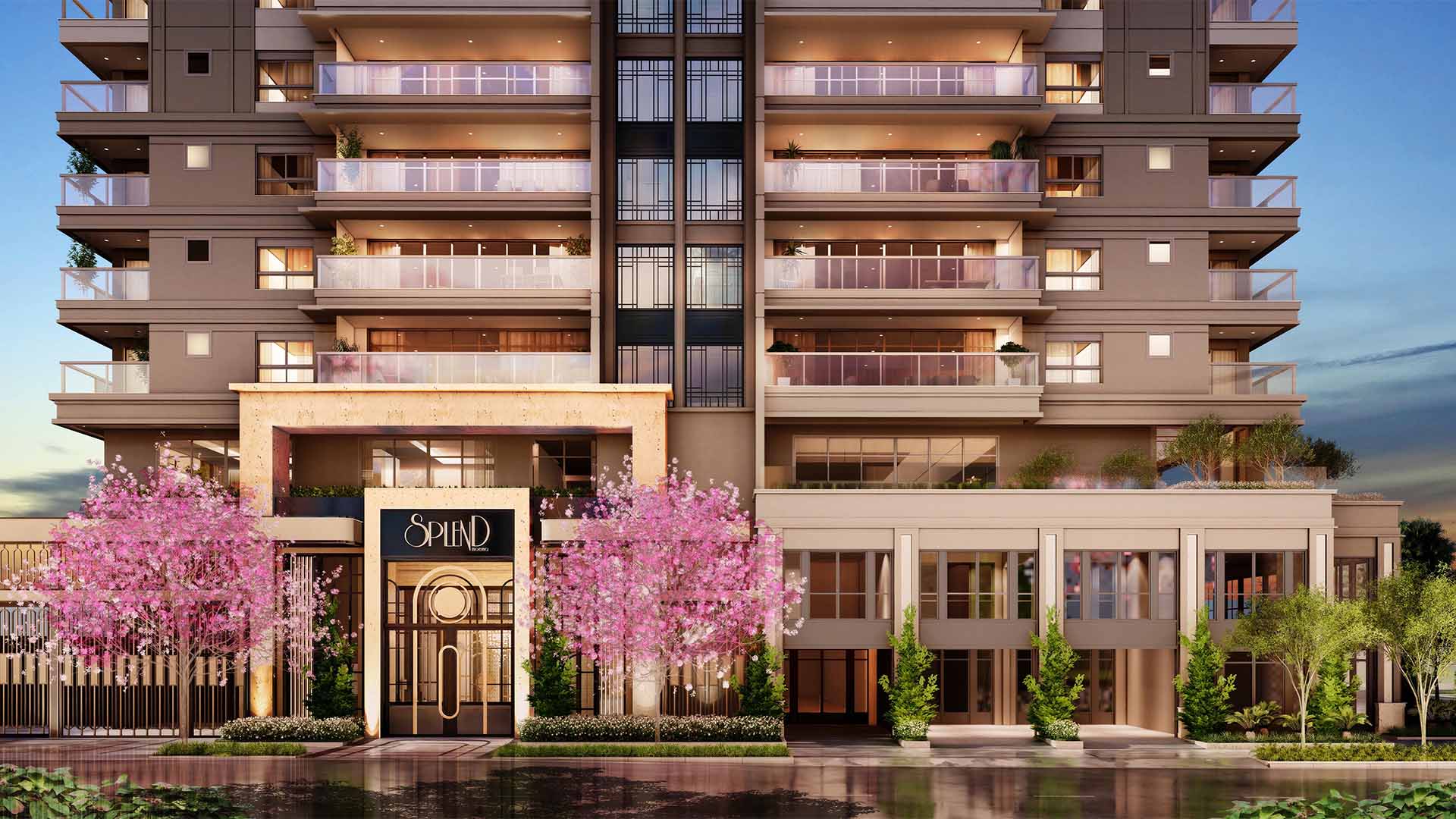
Why it may fit an international buyer: Gamaro on Alameda dos Maracatins, 888, Moema, near the Moema and Eucaliptos metro stations: 93 Residence apartments with 2 or 3 suites (87 to 153 m²), most with 2 parking spaces, and a rooftop with a 25 m pool. Architecture by MCAA, landscaping by Marcelo Faisal.
Points to consider: Pre-launch: prices from the developer's October 2026 list; unit availability is confirmed individually. The building's separate Smart wing (53 HMP units) is income-restricted and not part of this offer.
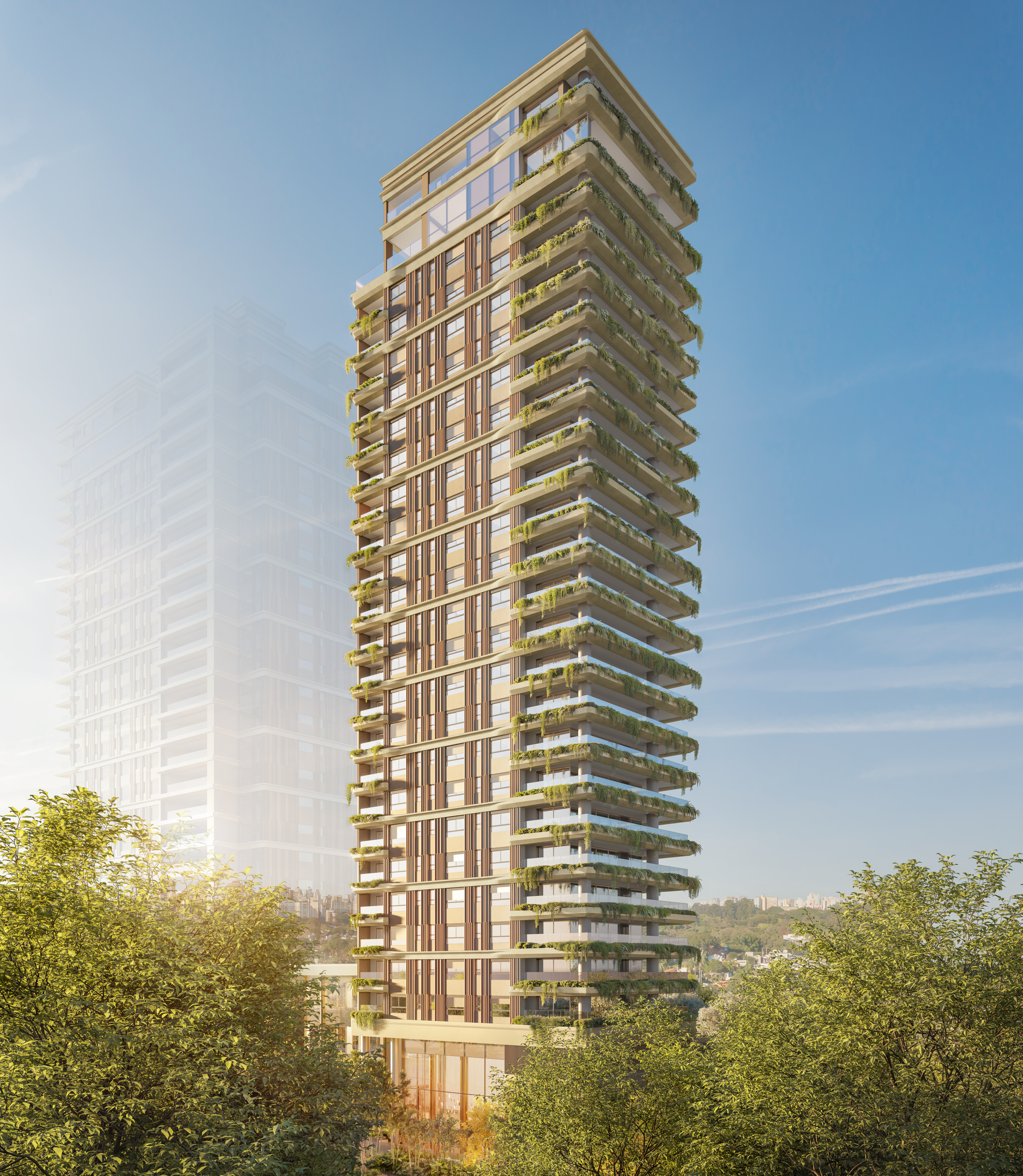
Why it may fit an international buyer: Exto in Moema Nobre, near Ibirapuera Park and Moema metro station: apartments of about 258 m² with 4 suites, a private social hall and generous terraces; amenities include a tennis court, pools and a spa.
Points to consider: Full address, floor plans and current availability are shared on request.
Where to buy in São Paulo: the south-zone neighborhoods we work in
Six neighborhoods, described by what they mean for a buyer's daily life rather than for a tourist. Ask us for current asking-price ranges in each neighborhood; we send them with source and date.
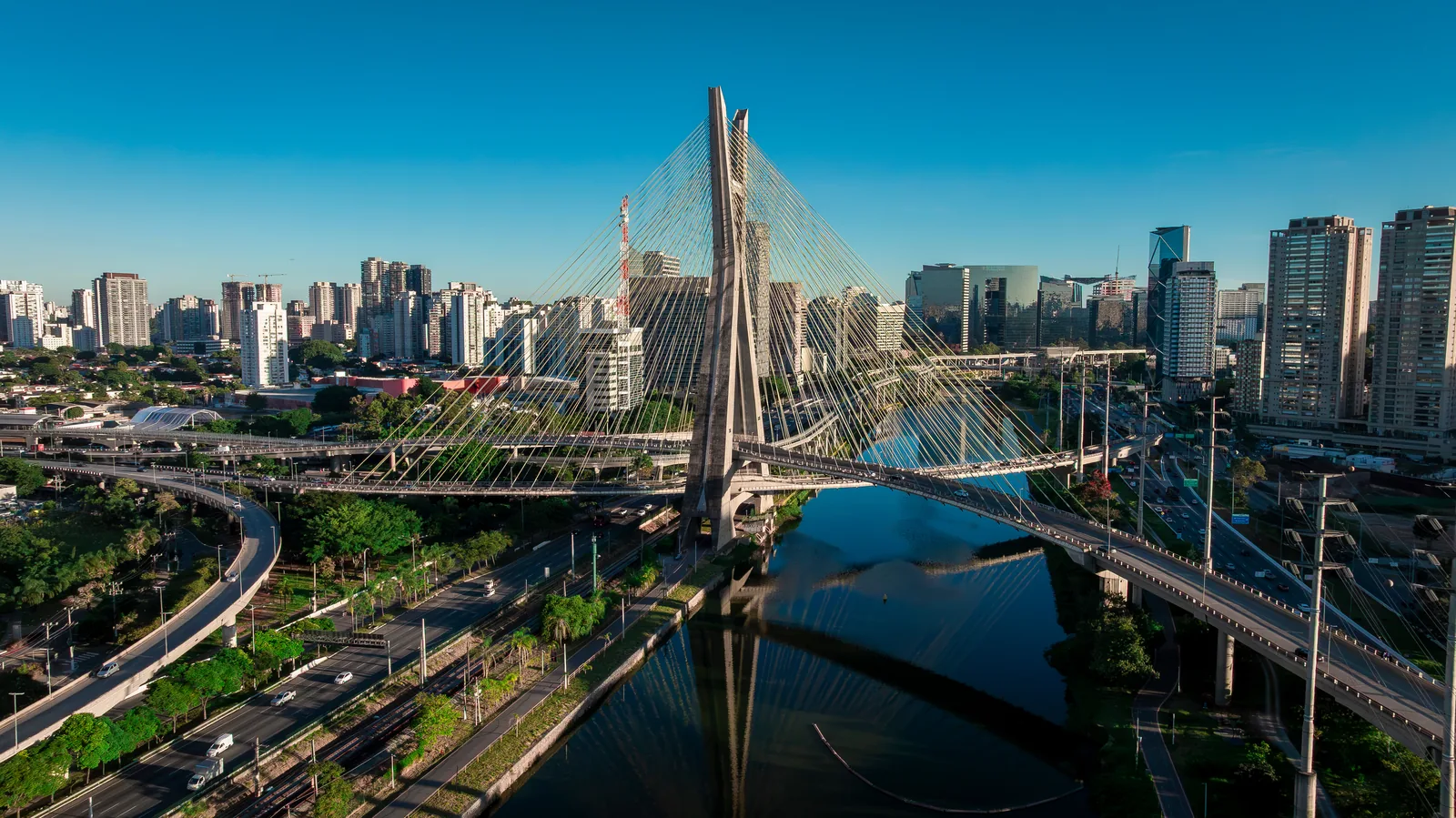
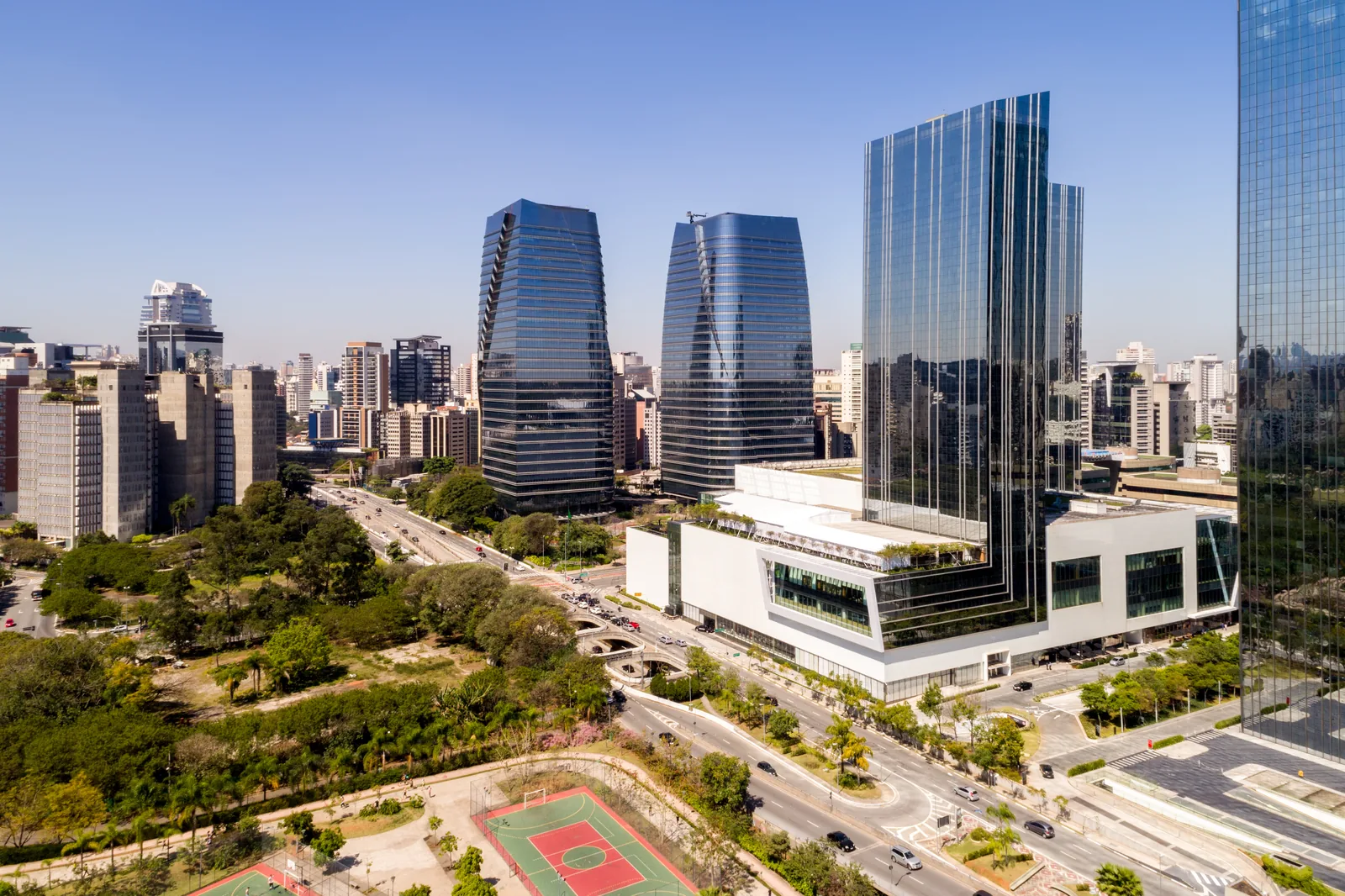
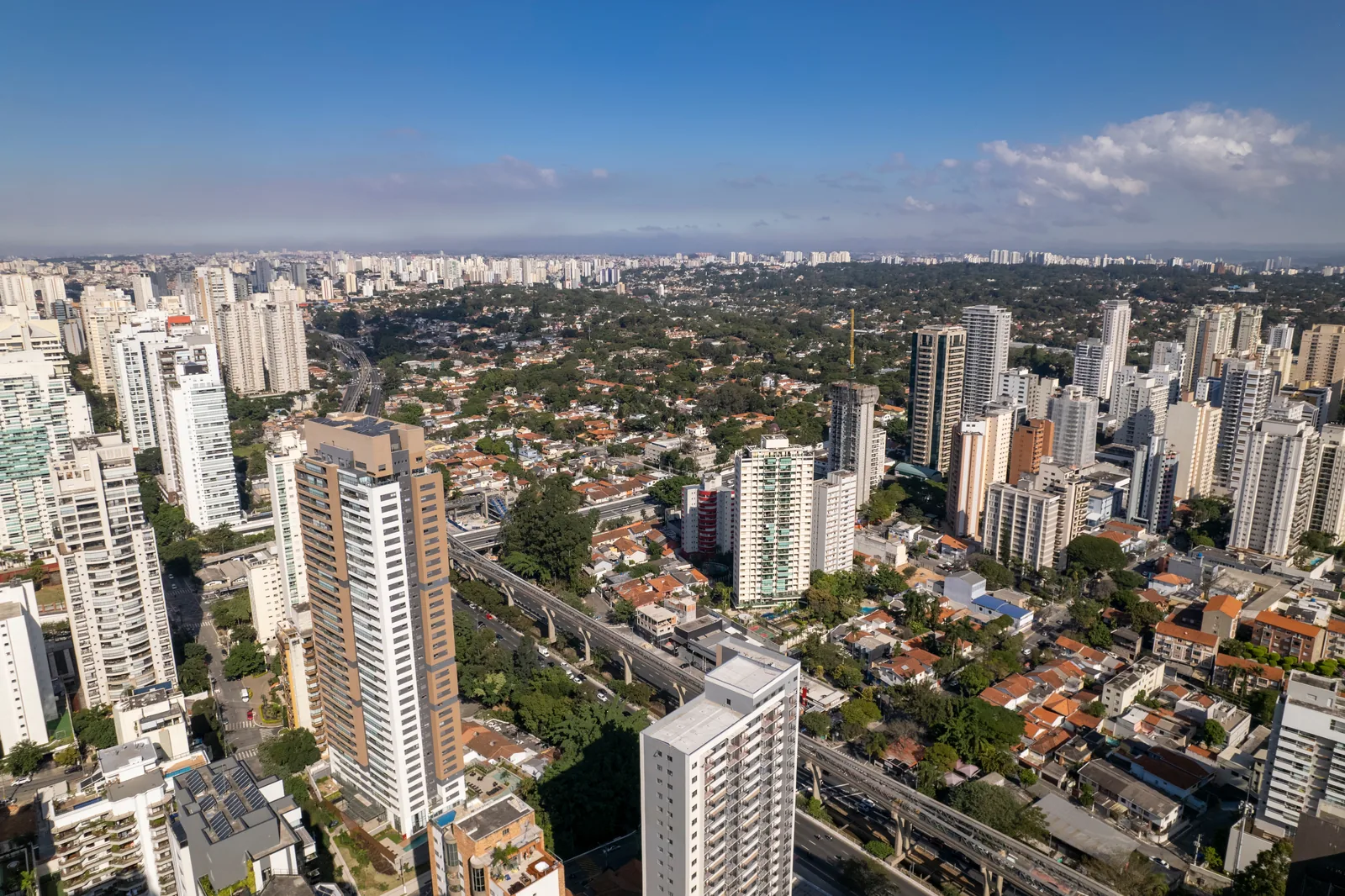
Photo: gustavofrazao / Adobe Stock
Itaim Bibi
The residential side of São Paulo's financial district. Walking distance to the Faria Lima offices, restaurants and the JK Iguatemi mall; dense with new compact towers and a few large family buildings. Fits executives relocating and investors targeting corporate tenants.
Tall residential towers on quiet, tree-lined streets next to Ibirapuera Park, with some of the city's highest residential prices per square meter. Few new launches, mostly large apartments. Fits families and long-term owners.
Residential and well served, between Ibirapuera Park and Congonhas airport, on the Lilás metro line. Family apartments and compact units side by side. Fits families moving to São Paulo and frequent flyers.
Where our office is. The Berrini and Chucri Zaidan corporate corridor meets a quiet residential grid; strong rental demand from companies based nearby. Fits rental investors and executives.
Looking for a house for sale in São Paulo? Read this first
In the south-zone neighborhoods we cover, new housing is almost entirely vertical: apartments in buildings with a concierge, parking and shared amenities such as a pool and a gym. Detached houses exist on some streets of Moema, Campo Belo and Brooklin, and in gated communities farther from the center, but they rarely come to market as new product and are usually resales. If a house is what you need, tell us: we'll say frankly whether the budget and the neighborhood fit, and point you to the right option, including outside our portfolio.
What Póvoa does for you — and what we leave to licensed professionals
We do
Understand your goal, budget and timing.
Shortlist developments with reasons for and against each one.
Visit buildings and units on your behalf, with live video or recorded walkthroughs.
Obtain the development's documents — registration, specifications, price list — and flag what deserves a lawyer's eye.
Present your proposal and negotiate with the developer.
Coordinate with your lawyer, the notary, the currency-exchange institution and, if needed, a sworn translator.
Attend the signing and stay with you until the keys.
We don't
Give legal or tax opinions. A lawyer you choose reviews the contract; we can introduce lawyers who work with foreign buyers.
File visa or residency applications.
Guarantee financing, appreciation or rental yields.
Hold your money. Every payment goes to the developer, the notary or the tax authority, never to Póvoa.
How buying an apartment from abroad works, step by step
The sequence below is the one buyers actually go through. Steps 1 to 4 cost you nothing; step 5 is the first financial commitment.
Brief and shortlist
A call or a few messages: goal, budget in your currency, timing, whether you'll travel. You get a shortlist with price lists, floor plans and our notes.
Get your CPF
The Brazilian taxpayer number is needed to sign a contract, pay and register the property. Apply at a Brazilian consulate or online through the Federal Revenue (Receita Federal); it usually takes from a few days to a few weeks, depending on the consulate. Do this early.
Visit, in person or by video
We walk the building, the show apartment and the street with you on a live call, or send a recorded tour. If you come to São Paulo, we book all the visits in one day.
Check the development
Before any money moves, we obtain the development's registration at the Property Registry (registro da incorporação), the specification (memorial descritivo), the developer's track record and the price list, and pass them to your lawyer for review.
Proposal, reservation and contract
Your written proposal goes to the developer; once accepted, you sign the purchase contract (compromisso de compra e venda) and pay the first installment. Off-plan contracts set the installment schedule, the index used to adjust it and the delivery forecast.
Pay from abroad
You send funds through a bank or authorized exchange institution in Brazil under an exchange contract that identifies you, the purpose (property purchase) and the beneficiary. Keep every exchange contract: they document the origin of the money for a future residency application and let you repatriate the proceeds when you sell.
Sign, in person or by power of attorney
If you can't be in Brazil, a public power of attorney lets a representative sign for you. Signed at a Brazilian consulate, it is already a Brazilian document and needs no apostille or translation. Signed before a foreign notary, it needs an apostille, a sworn translation and registration in Brazil. In some cases the deed can be signed remotely by video through Brazil's e-Notariado platform; we check with the notary for your case.
Delivery, deed and registration
For an off-plan purchase, construction takes two to four years; installments during that time are adjusted by a construction-cost index (INCC). At delivery you pay the balance, the deed is signed, the 3% transfer tax is paid and the deed is registered at the Property Registry. That registration is what makes you the owner.
After the keys
We help with the inspection, utility accounts and, if you'll rent the unit out, an introduction to a property manager.
Ready apartment: typically 30 to 60 days from accepted proposal to registration, if your CPF and documents are in order. Off-plan: contract within weeks; ownership registration after delivery.
What it really costs to buy an apartment in São Paulo
Beyond the price, budget around 4% for taxes and registration, plus smaller items that depend on your situation. Figures below are for the city of São Paulo, checked on 2 October 2026; we send an itemized estimate for the specific unit before you commit.
One-off costs
Property price
Developer's official list price, in BRL. Off-plan: installments adjusted by INCC during construction, balance at delivery.
Brokerage
Paid by the developer. No separate fee to Póvoa.
Transfer tax (ITBI)
3% of the purchase price (the city compares it with its own reference value). Paid when the deed is signed; for off-plan, after delivery.
Deed and registration (escritura + registro)
Set by the São Paulo state fee tables in force since 8 January 2026, progressive with value. For a R$ 1,000,000 property: about R$ 6,100 for the deed and about R$ 3,900 for the registration, plus small certificate fees.
Your lawyer
Optional but recommended. Fees agreed directly with the lawyer; we introduce ones used to foreign buyers.
Sworn translation and apostille
Only for documents issued abroad (power of attorney, marriage certificate). Apostille in your country; sworn translation in Brazil, typically a few hundred reais per document.
Currency exchange
The institution's spread plus IOF, a federal tax on the conversion whose rate depends on the type of transaction. Both are quoted before you send.
Recurring costs
Condominium fee (condomínio)
Monthly, set by each building's budget: staff, maintenance and amenities. We quote the current fee for each unit we send you.
Property tax (IPTU)
Annual, charged by the city on the assessed value; payable in installments.
Utilities and insurance
Electricity, gas, internet; building insurance is usually included in the condominium fee.
Property management
If you rent out: a fee agreed with the manager, usually a percentage of rent.
A R$ 1,000,000 apartment: ITBI R$ 30,000 + deed and registration about R$ 10,000 = about R$ 40,000 (4% of the price), before translations, your lawyer and exchange costs. Indicative conversion at commercial rates on 1 October 2026: R$ 1,000,000 ≈ US$ 191,000 / € 169,000 / £ 145,000, for orientation only.
Taxes after you buy: IPTU, rental income and resale
Owning: IPTU, the annual municipal property tax. Renting out: rent paid to a non-resident owner is subject to withholding tax in Brazil, generally 15% of the gross rent (25% for residents of jurisdictions Brazil lists as low-tax), withheld by the tenant or the manager; your home country may tax it too, subject to any treaty. Selling: capital gains are taxed in Brazil at progressive rates starting at 15%. Many non-resident owners appoint an attorney-in-fact in Brazil to handle these payments. These rules change; a Brazilian tax adviser confirms the current ones for your case. Last checked 2 October 2026.
Buying off-plan in Brazil: what protects you and what to check
Most of what Póvoa sells is new: launches and buildings under construction. Brazil regulates these sales in detail (Law 4,591/1964), and the protections are real, provided you check that they are in place.
Registration of the development
A developer may only sell units after registering the development (incorporação) at the Property Registry. We obtain the registration number before you sign.
Segregated assets (patrimônio de afetação)
Many large developers ring-fence each project's assets and cash so that buyers' payments are protected if the company fails. We check whether the development has it.
Installments and indexation
During construction, installments are adjusted monthly by the INCC construction-cost index; after delivery, by an inflation index plus interest if you still owe a balance to the developer. Ask for the full schedule, not the headline price.
The balance at delivery
Often the largest payment. Residents usually finance it with a bank mortgage; non-residents rarely can. Plan to pay it with your own funds and start the exchange early.
Canceling
If you withdraw from an off-plan contract, Brazilian law (Law 13,786/2018) lets the developer keep the brokerage commission plus a penalty of up to 25% of the amounts paid, or up to 50% in developments with segregated assets, and sets the refund timetable. Read that clause before signing.
What's delivered
Brazilian new apartments are typically delivered without kitchen cabinets, wardrobes, appliances or light fittings, and sometimes without floor finish in bedrooms and living areas. The specification (memorial descritivo) is the contract; the show apartment is marketing. Budget for fit-out.
Short-term rentals
Allowed or not depending on the building's rules; some developments are designed for it, others prohibit it. We tell you before you choose. Social-housing units (HIS/HMP) in mixed buildings have income limits and cannot be rented short-term; we only shortlist market-rate units for international buyers.
Buying property and residency in Brazil — the "Golden Visa"
Brazil has a residency-by-investment route linked to real estate (CNIg Normative Resolution 36/2018, as amended): investing at least R$ 1,000,000 in urban property in São Paulo, built or under construction in a registered development, with funds transferred from abroad and the property registered in your name. The lower R$ 700,000 threshold applies only to the North and Northeast regions, not to São Paulo.
The initial residence authorization is for up to four years and can be converted to indefinite if the investment is maintained and the requirements are met. Buying the property does not grant residency by itself: the application is a separate procedure examined by the Ministry of Justice, usually prepared by an immigration lawyer. Brazil does not offer citizenship by investment; naturalization has its own residence-time requirements.
If residency is part of your plan, tell us before the shortlist: the development's registration status and how you pay affect eligibility, and it is easier to choose the right building than to fix the paperwork later.
Frequently asked questions about buying an apartment in São Paulo from abroad
Eligibility and ownership
Can a foreigner buy an apartment in São Paulo?
Yes. Foreign citizens, resident or not, can buy and own urban property in Brazil in their own name, with the same rights as Brazilians. Restrictions exist only for rural land and some border areas, which don't apply to apartments in São Paulo.
Do I need a visa or residency to own property in Brazil?
No. Ownership doesn't depend on immigration status. You can own an apartment as a tourist, a non-resident or someone who never visits. Residency is a separate process, explained in the residency section.
What is a CPF and how do I get one from abroad?
The CPF (Cadastro de Pessoas Físicas) is Brazil's individual taxpayer number, needed to sign a contract, pay and register the property. Foreigners can apply at a Brazilian consulate or online through the Federal Revenue with a passport; it usually takes from a few days to a few weeks. We send you the current step-by-step when we start.
Will the apartment be in my name?
Yes, as an individual, once the deed is registered at the Property Registry. The registration record (matrícula) is the public proof of ownership. You don't need a Brazilian company to own a home; some investors use one for tax or succession reasons, which is a decision for your lawyer and tax adviser.
Buying from abroad
Can I buy without traveling to Brazil?
In most cases, yes. You sign a public power of attorney, ideally at a Brazilian consulate, which makes it valid in Brazil without apostille or translation, and a representative signs for you. Some notaries also accept remote video signing through e-Notariado. We confirm the route for your case before you commit; we don't promise that every notary accepts every remote format.
Do I need a visa to visit São Paulo for the signing?
It depends on your passport. Since April 2025, citizens of the United States, Canada and Australia need an e-visa; citizens of the United Kingdom and most European Union countries can enter visa-free for up to 90 days. Check with the Brazilian consulate before booking.
How do we communicate?
In English, by WhatsApp, e-mail or Google Meet (with live captions if useful). Office hours are Monday to Friday, 8am to 6pm, and Saturday, 9am to 2pm, São Paulo time (UTC−3); messages are answered within one business day.
Money and costs
Do I need a Brazilian bank account?
Not to buy. Payments go through a Brazilian bank or authorized exchange institution directly to the developer, under an exchange contract in your name. Opening a local account as a non-resident is possible but slow, and most buyers don't need it.
How do I pay from abroad?
By international transfer to a Brazilian bank or authorized exchange institution, which converts the funds and pays the developer under an exchange contract stating the purpose. Keep every contract: they prove the origin of funds for a residency application and allow you to repatriate the proceeds when you sell.
Can I get a mortgage in Brazil as a non-resident?
Rarely. Brazilian banks generally require residency and income in Brazil. Plan on your own funds; for off-plan purchases, the developer's installment plan during construction spreads part of the price.
What does it cost on top of the price?
Around 4% in the city of São Paulo: 3% transfer tax (ITBI) plus roughly 1% in deed and registry fees, then translations, your lawyer and exchange costs. See the costs section for the breakdown and a worked example.
Are prices in Brazilian reais?
Yes. Developers' price lists and contracts are in BRL. Your cost in your own currency moves with the exchange rate between proposal and payment; we show an indicative conversion with its date, never a fixed foreign-currency price.
New developments
Is it safe to buy an off-plan apartment in Brazil?
It can be, with three checks: the development is registered at the Property Registry, it has segregated assets (patrimônio de afetação), and the developer has a delivery track record. We obtain the documents; your lawyer reviews them. Most of what we sell comes from large listed or long-established developers.
What if I need to cancel an off-plan purchase?
Brazilian law lets the developer keep the brokerage commission plus a penalty of up to 25% of what you've paid, or up to 50% in developments with segregated assets, and sets when the refund is due. The contract spells it out; read that clause before signing.
How long does a purchase take?
A ready apartment: typically 30 to 60 days from accepted proposal to registration if your CPF and documents are ready. Off-plan: the contract is signed within weeks; delivery and registration come at the end of construction, usually two to four years.
Do I need a lawyer?
Not by law, but we recommend one for a foreign buyer: to review the contract, the development's documents and the power of attorney. We can introduce lawyers used to international clients; you hire and pay them directly.
Can I rent the apartment out?
Yes. Long-term leases are standard; short-term rentals depend on the building's rules. Rent paid to a non-resident is subject to Brazilian withholding tax, generally 15%. A property manager can handle tenants, payments and tax for a fee.
Residency
Does buying property give me residency in Brazil?
Not by itself. Brazil's residency-by-investment route requires at least R$ 1,000,000 in urban real estate in São Paulo, funds from abroad and a separate application to the Ministry of Justice. Buying a cheaper apartment, or buying with funds already in Brazil, doesn't qualify. See the residency section.
Working with Póvoa
Who pays Póvoa, and will you only show me buildings that pay you?
The developer pays our commission; you pay the official list price and no fee to us. We're paid by whichever developer you buy from, so we have no reason to favor one. Our shortlist comes from the south-zone developments we work with; if none fits, we say so.
Which neighborhoods do you cover?
Itaim Bibi, Vila Nova Conceição, Moema, Brooklin, Vila Olímpia and Campo Belo, plus Ibirapuera, Jardins and Chácara Santo Antônio, all in São Paulo's south zone. We don't cover other cities or beach areas.
About Póvoa Boutique Imobiliária
Póvoa Boutique Imobiliária (Póvoa Consultoria Imobiliária Ltda., CNPJ 50.607.950/0001-57, CRECI/SP J-043301) is a boutique brokerage with an office at Avenida Engenheiro Luís Carlos Berrini, 1748, 17th floor, Brooklin, São Paulo. Founded and led by Pedro Póvoa, it works with a team of licensed brokers, each dedicated to one south-zone neighborhood, and sells new developments by Cyrela, EZTEC, Even, Lavvi, Gamaro and Nortis, among others.
Rated 5.0 on Google from 26 reviews (checked 2 October 2026).
“Pedro was very attentive throughout my search for a top-tier property in Moema. He brought interesting options and explained the pros and cons of each one, professionally and impartially.”
Sergio Pereira · Google review · Translated from Portuguese.
“Pedro was always responsive to my requirements, and he and his team screened the options carefully. In the end, I can say I was very well served by Póvoa.”
Felipe Torres · Google review · Translated from Portuguese.
Brazilian visa requirements by nationality, Ministry of Foreign Affairs
All sources checked on 2 October 2026.
The information on this page is general and reflects the rules as checked on the date above. It is not legal, tax or immigration advice. Before signing documents or transferring funds, have your situation reviewed by a licensed professional. Póvoa is a real estate brokerage, not a law firm.